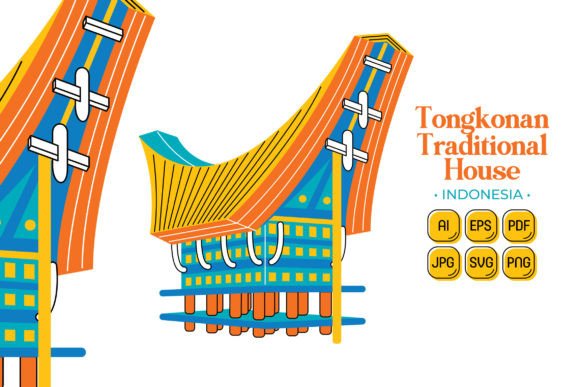
Tongkonan House Graphics: Vector Illustrations for Branding
As a brand designer specializing in local business identity, my first impression of the Tongkonan Traditional House Vector Art is that it carries an immediate sense of heritage and structural elegance. The distinct saddleback roof silhouette is not merely architectural; it is a cultural symbol that communicates stability, tradition, and community. For a small business owner, this graphic design asset suggests a brand personality that is deeply rooted, authentic, and respectful of craftsmanship. It does not feel generic or mass-produced. Instead, it evokes a mood that is organic yet structured, making it exceptionally suitable for businesses that want to highlight artisanal quality or cultural storytelling. Whether you are launching a specialty coffee roastery, a handmade textile boutique, or a heritage food product, this illustration anchors your visual identity in something tangible and meaningful.
Elevating Product Packaging and Label Design
In a recent branding project for a local artisanal soap maker, we needed packaging design elements that felt premium but remained connected to local ingredients. The Tongkonan Traditional House Vector Art served as the perfect secondary mark on the product label. Because it is a vector-based graphic, I could scale it down to fit a 2-inch soap box without losing line integrity, or expand it to serve as a watermark pattern on tissue paper. This versatility is crucial for physical products where space is at a premium.
For food businesses and handmade sellers, this asset works beautifully as a framing device or a background texture. You can create countless variations for infographics, social media, printing material, website, landing page, banner, and other illustration purpose. Can be easily resized and change colors of each an element to match specific seasonal campaigns or flavor profiles. For example, changing the vector fill from a deep terracotta to a soft sage green instantly shifts the mood from rustic warmth to organic freshness. This adaptability ensures that your packaging design remains consistent across different SKUs while allowing for necessary visual differentiation.
Strengthening Visual Hierarchy in Marketing Visuals
Beyond packaging, this illustration plays a vital role in establishing a clear visual hierarchy across your marketing visuals. When designing social media graphics or promotional banners, the strong geometric lines of the Tongkonan structure draw the eye naturally toward the center or top of the composition. This makes it an ideal hero graphic for Instagram posts announcing a new store opening or a Facebook ad promoting a cultural festival sale.
For web design and landing pages, the asset adds editorial sophistication without overwhelming the user interface. It acts as a decorative brand element that reinforces your narrative. In my experience working with creative entrepreneurs, using culturally significant illustrations like this builds stronger emotional connections with customers than abstract shapes ever could. It signals to the viewer that this is a local business with a story, improving customer trust and perceived value. When used in email newsletters or printable inserts, it transforms standard commercial design into a piece of cultural appreciation.
Where This Asset Shines in Commercial Design
Through testing various applications, I have identified specific areas where the Tongkonan Traditional House Vector Art delivers the highest return on investment for small business branding:
- Heritage Food Labels: Perfect for coffee bags, spice jars, or snack packaging where origin stories matter.
- Boutique Signage: Works exceptionally well on window decals, hanging signs, and business cards for textile or craft shops.
- Cultural Event Promotion: Ideal for flyers, posters, and tickets for festivals, markets, or community gatherings.
- Thank-You Cards: Adds a thoughtful, personalized touch to unboxing experiences for e-commerce sellers.
- Editorial Layouts: Enhances blog headers or magazine features discussing local tourism or traditional crafts.
In these contexts, the illustration supports professional branding by providing a recognizable visual anchor that competitors likely do not possess. It moves beyond generic clipart and functions as a legitimate component of a cohesive brand identity system.
Navigating Limitations and Usage Cautions
However, as with any powerful design asset, restraint is necessary. There are scenarios where this illustration should be used carefully to avoid undermining your message. In formal corporate branding for tech or finance sectors, the cultural specificity may clash with a desired neutral or global aesthetic. Similarly, on very small labels or crowded product packaging, the intricate details of the roof structure can become muddy if reduced below a certain threshold. Always prioritize legibility of essential information like ingredients, pricing, and legal disclaimers over decoration.
I also advise against using this asset in luxury minimalist brands where negative space is the primary design feature. The Tongkonan shape is visually active; placing it in a layout that requires silence can create visual tension that feels unintentional. Furthermore, ensure the illustration does not compete with your logo design. It should support the primary mark, not replace it. If your logo already contains complex architectural elements, adding this vector art might result in a cluttered visual hierarchy that confuses rather than clarifies.
Practical Designer Notes for Implementation
Before integrating this graphic design asset into your next campaign, run through this practical checklist to ensure professional results:
- Test Print Quality: Always print a test swatch at actual size. Vectors look crisp on screen, but ink spread on uncoated paper can thicken fine lines. Adjust stroke weights if necessary.
- Verify Editability: Confirm the file is true SVG design or editable AI/EPS format. Rasterized PNG design files limit your ability to recolor elements to match your exact brand palette.
- Check Font Pairings: Test the illustration beside your chosen typography. It pairs beautifully with serif fonts for a traditional look or clean sans serif fonts for a modern fusion aesthetic. Avoid overly ornate script fonts that mimic the complexity of the roofline.
- Review Licensing: Before selling products or running paid ads, verify the commercial license terms. Ensure you have the right to use the asset for physical product sales and digital marketing visuals.
- Mockup Testing: Never finalize a design without seeing it in context. Use a realistic product mockup to evaluate how the illustration interacts with packaging folds, shadows, and lighting.
- Contrast Check: Ensure the vector color has sufficient contrast against your background. Low-contrast combinations fail accessibility standards and reduce shelf appeal.
By treating the Tongkonan Traditional House Vector Art as a strategic tool rather than mere decoration, you elevate your entire brand presentation. It offers small business owners a unique opportunity to blend modern design sensibilities with deep cultural resonance. Whether utilized in a Canva template for quick social content or customized in Adobe Illustrator for bespoke packaging, this asset provides the flexibility needed for today’s dynamic market. Ultimately, successful branding is about connection, and few things connect faster than imagery that honors place, history, and craftsmanship. When applied with intention and technical precision, this illustration becomes more than just a graphic; it becomes a silent ambassador for your business values and a testament to the richness of local identity.