Nft Icons: A Designer’s Embroidery Review
As a professional embroidery designer and product reviewer, I approach every new graphic asset with a specific question: will this actually stitch out well on fabric? When evaluating Nft Icons, my initial assessment focuses on translating digital simplicity into tangible thread. These graphics are marketed as simple and clean icon designs perfect for websites, mobile apps, books, social media, infographics, flyers, print, banners, and posters. However, for those of us in the craft business or running an Etsy seller account, the real value lies in their adaptability to physical media. The minimalist aesthetic suggests high potential for modern custom apparel and boutique branding, but only if the vector lines can withstand the transition from screen to needle.
Translating Digital Clean Lines to Thread
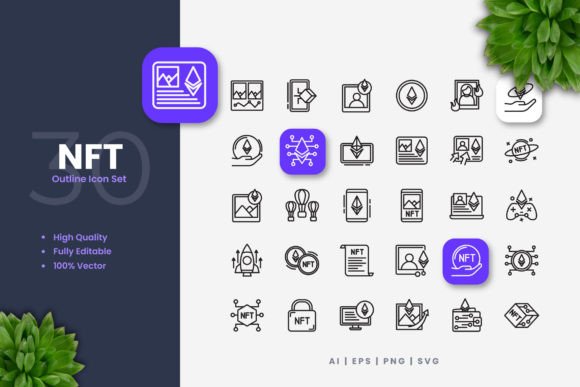
The first impression of Nft Icons is one of geometric precision and uncluttered visuals. In the digital space, this creates a sleek, tech-forward mood. For embroidery, this cleanliness is generally a positive indicator. Complex gradients and tiny details often fail in stitching, but these icons appear to rely on bold shapes and clear negative space. This makes them prime candidates for conversion into a machine embroidery design. The lack of visual noise means that when digitized, the design can utilize efficient running stitch outlines and smooth satin stitch borders without becoming overly dense.
However, because the product description notes that you can resize, change color, or edit stroke weight, it implies these are vector-based graphics rather than pre-digitized files. This is a crucial distinction. As an embroiderer, this flexibility is excellent. It allows me to adjust the stroke weight specifically for thread thickness before digitizing. A line that looks perfect on a monitor might be too thin for a 40-weight rayon thread. Being able to thicken those lines in the source file ensures that the final embroidery file produces crisp, visible results rather than sinking into the fabric weave.
Real-World Application: The Modern Tote Bag Test
To truly evaluate the viability of Nft Icons for a handmade product, I mentally placed this design onto a canvas tote bag intended for a tech conference giveaway. Tote bags are a staple small shop product, but canvas texture can swallow fine details. In this scenario, the icon’s simplicity works in its favor. I envisioned using a high-contrast thread colors palette—perhaps a neon green or electric blue against natural canvas—to mimic the digital aesthetic in a tactile form.
For this tote bag design, the clean lines would likely require a tear-away stabilizer to prevent puckering on the woven cotton. Because the icons are designed for versatility, I could scale the graphic to fit a 4x4 hoop size for a subtle pocket placement or expand it for a center-chest statement piece. The key here is that the design’s personality remains intact at various scales. Unlike intricate illustrations that lose definition when resized, these icons maintain their structural integrity. This reliability is essential for commercial embroidery where consistency across fifty or five hundred units determines client satisfaction and brand trust.
Fabric Considerations and Stitching Limitations
While the versatility of Nft Icons is appealing, practical judgment requires acknowledging where they might struggle. Not all fabrics welcome digital aesthetics equally. On stretchy knits used for sweatshirt embroidery or performance wear, the rigid geometry of these icons can cause distortion if the stitch density isn't balanced correctly. If the digitizer uses too many stitches to achieve that "clean" look, the fabric may pucker; too few, and the design looks sparse.
I would also exercise caution with baby embroidery projects. While the icons are cute and modern, the satin stitches required to replicate solid icon fills can create a stiff, scratchy surface against sensitive skin. For nursery decor or baby items, I would recommend testing the design on scrap fabric first to ensure the backside is comfortable or considering an applique design variation where the icon shape is created with fabric rather than dense thread. Additionally, highly textured fabrics like terry cloth towels or fleece blankets may obscure the sharp edges that define these icons. In such cases, adding a knockdown stitch or choosing a bolder version of the icon is necessary to preserve readability.
Navigating Small Details and Curved Surfaces
Another area requiring careful evaluation is curved surfaces like caps. Nft Icons are inherently flat and two-dimensional. Wrapping a rigid geometric shape around the curve of a baseball cap can result in visual warping. If using these for headwear, select icons with organic symmetry or simpler silhouettes that forgive slight distortion. Furthermore, while the ability to edit stroke weight is powerful, there is a physical limit to how thin a stitch can go. Any element thinner than 1mm risks breaking needles or failing to register visually. Always verify that the smallest details in the chosen icon exceed the minimum stitch width for your specific machine and thread type.
Enhancing Product Value and Brand Consistency
Beyond technical execution, we must consider market perception. For Etsy sellers and creative entrepreneurs, using recognizable yet unique iconography helps establish a cohesive brand identity. Nft Icons offer a contemporary vocabulary that signals innovation and modernity. When applied to merchandise like patches, aprons, or phone cases, they elevate the perceived value of the item from "homemade" to "professionally designed."
This professional polish extends to marketing assets as well. Since these icons are suitable for print and social media, you can use the exact same visual language in your printable mockup listings as you do on the physical finished product. This consistency builds buyer confidence. Customers appreciate seeing a digital preview that accurately represents the embroidered reality. By leveraging these design assets across both digital and physical touchpoints, you create a seamless experience that reinforces your shop's professionalism and attention to detail.
Essential Pre-Stitch Checklist for Makers
Before committing Nft Icons to a production run or listing a new personalized gift, adhere to this practical workflow:
- Verify Licensing: Confirm whether your purchase includes rights for commercial use on finished goods and digital products. Terms vary significantly between personal and business licenses.
- Test Digitization: Never assume a vector graphic converts perfectly. Run a test stitch-out on the exact fabric you intend to sell. Check for gaps, pulls, or registration issues.
- Assess Contrast: View the design in black and white before stitching. If the icon relies solely on color contrast rather than value contrast, it may disappear on similarly toned fabrics.
- Check Stabilizer Pairing: Match your stabilizer to the fabric weight and stitch density. Lightweight fabrics need cut-away support for satin-heavy icons; sturdy canvas may only need tear-away.
- Review Resize Limits: While vectors scale infinitely, embroidery does not. Determine the safe minimum and maximum sizes for the specific icon chosen to avoid losing detail or creating bulletproof patches.
- Mockup Accuracy: Use realistic textures in your digital previews. Showing a flat icon on a textured towel mockup sets better customer expectations than a sterile white background.
Ultimately, Nft Icons represent a valuable resource for the modern maker, bridging the gap between digital trends and traditional craftsmanship. Their success in your shop depends entirely on thoughtful translation. By respecting the physics of thread and fabric while leveraging the clean aesthetic of these graphics, you can create holiday embroidery, corporate swag, and everyday accessories that feel fresh, relevant, and impeccably made. Always let practical testing guide your creative decisions, ensuring that every stitch serves both the design and the customer.