Gardening Icons: An Embroidery Designer’s Review
First Impressions: Clean Lines for Stitch Translation
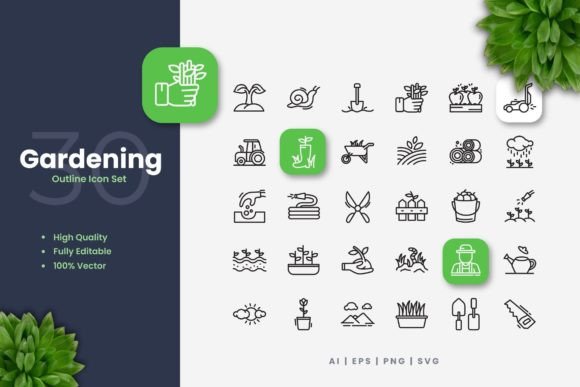
As an embroidery designer who constantly evaluates digital assets for stitchability, my first look at the Gardening Icons collection was focused entirely on translation potential. While the product description highlights these as simple and clean graphics perfect for websites, mobile apps, and print, I immediately saw them through the lens of needle and thread. The minimalist aesthetic is exactly what modern machine embroidery design demands. Complex, shaded illustrations often fail when converted to stitches, but these icons possess the geometric clarity required for a successful embroidery file.
The visual personality here is organized, botanical, and approachable. For a crafter or Etsy seller, this mood suggests products that are fresh and contemporary rather than rustic or vintage. When I evaluate graphics for embroidery projects, I look for distinct separation between elements. These Gardening Icons offer that breathing room, meaning you won't have to fight with excessive jump stitches or muddy details when digitizing. They feel like they were drawn with intention, which gives me confidence they will serve as excellent foundational design assets for both personal and commercial embroidery work.
Real-World Application: Digitizing for a Canvas Tote Bag
To truly test the viability of these graphics, I approached them with a specific real-life scenario in mind: creating a custom embroidered tote bag for a local plant shop’s merchandise line. This is a common request for small shop product owners and apparel decorators. Canvas is a textured fabric that can swallow fine details, so the "simple and clean" nature of these icons became their greatest strength.
I selected a watering can and a potted succulent icon from the set. Because the original files allow you to resize, change color, or edit stroke weight, I was able to adjust the line thickness before digitizing. This is crucial. A standard web graphic might have a 2px stroke, but for satin stitch or running stitch definition on canvas, I needed to simulate a heavier weight. The resulting tote bag design was crisp and legible from a distance. Unlike intricate floral patterns that require high stitch density and heavy stabilizer, these icons stitched out quickly and laid flat against the fabric texture. For a handmade product intended for daily use, this durability and clarity directly translate to higher perceived value and customer trust.
Versatility Across Apparel and Home Goods
Beyond tote bags, the utility of Gardening Icons spans numerous categories relevant to creative entrepreneurs. Their scalable nature makes them ideal for:
- Sweatshirt Embroidery: Placed as a left-chest logo or centered minimal art, the clean lines prevent the garment from feeling stiff or bulletproof.
- Baby Embroidery: Safety and comfort are paramount. These icons avoid dense fill stitch areas, making them soft against sensitive skin for bibs or nursery decor.
- Kitchen Textiles: Tea towels and aprons benefit from the thematic relevance. The simplicity ensures the design doesn't compete with the functionality of the item.
- Embroidered Patches: The distinct outlines make digitizing for merrowed edges straightforward, perfect for craft business branding or club insignias.
For digital product sellers, these graphics also serve double duty. You can use the original vector files for printable mockups or social media marketing while selling the physical embroidered version, maintaining brand consistency across platforms.
Navigating Fabric Challenges and Technical Limits
While Gardening Icons are versatile, no design is immune to the physics of embroidery. As a reviewer, I must highlight where caution is necessary. The very simplicity that makes these icons attractive also means there is nowhere to hide poor execution. On stretchy fabrics like jersey knits used for t-shirts, thin running stitches can tunnel if the stabilizer isn't adequate. Even though the design is light, you must still use proper cut-away stabilizer to maintain shape integrity.
Be particularly careful with detailed corners when resizing. If you scale an icon down too small for a cap or baby collar, interior negative spaces may close up during stitching. Always check your stitch density after resizing. Additionally, on dark fabrics, ensure your thread colors provide sufficient contrast. A dark green outline on a navy sweatshirt will disappear; these icons rely on silhouette recognition. If you plan to use them on textured surfaces like terry cloth or fleece, consider adding a topping or converting key elements to applique design techniques to prevent the stitches from sinking into the pile.
Professional Notes for Makers and Sellers
Before listing any finished product derived from these assets, professional due diligence is non-negotiable. Here are my practical recommendations for integrating Gardening Icons into your workflow:
- Test Stitch First: Never run a production batch without a sew-out on scrap fabric identical to your final project. Verify that the edited stroke weights translate correctly to thread.
- Verify Licensing: The description mentions versatility for print and digital, but confirm the specific terms regarding commercial embroidery. Ensure you are cleared to sell physical goods or distribute the digitized embroidery file.
- Mockup Strategy: Use black and white mockups to test visual hierarchy before committing to thread colors. This helps identify if the icon reads well without relying on color contrast alone.
- Hoop Size Confirmation: Measure your actual design area after editing. Resizing vectors is easy, but fitting them into your machine’s maximum hoop size requires planning to avoid re-hooping.
- Thread Color Planning: Since these are icon-based, they often work best with limited palettes. Plan your thread colors to match your shop’s aesthetic or the client’s brand guidelines precisely.
Elevating Handmade Value Through Strategic Design
Ultimately, Gardening Icons represent a smart investment for makers who understand that less is often more in embroidery. In a market saturated with overly complex, stitch-heavy designs, offering a personalized gift or boutique product featuring clean, intentional art stands out. It signals professionalism and respect for the medium. Whether you are an Etsy seller looking for fresh inventory ideas or a hobbyist wanting a reliable go-to motif, these graphics bridge the gap between digital design and tangible craftsmanship.
The ability to edit stroke weight and color gives you control that pre-digitized files rarely offer. This flexibility allows you to tailor the design to the specific fabric texture and end-use, ensuring the finished product looks bespoke rather than generic. By treating these icons as adaptable blueprints rather than static images, you unlock their full potential for holiday embroidery, custom apparel, and commercial branding. Just remember to respect the technical requirements of your machine and fabric, and these simple gardening motifs will yield professional, sellable results every time.